
Raw Pet Food, Safety & The Recent FSA Headlines – A Balanced Look
You may have seen recent headlines about the Food Standards Agency (FSA) looking at bacteria in raw pet food. Whenever these reports hit the media, they can sound quite alarming — but like most things, the reality is more nuanced.
So here’s a calm, honest look at what it means (and what it doesn’t).
First things first — where raw pet food comes from
One point often misunderstood is that much raw pet food originates from the same human food supply chain.
When meat is reclassified for pet food, it’s usually because:
-
It’s surplus to human demand,
-
It’s a cut or part people don’t commonly eat, or
-
It simply doesn’t fit retail presentation standards.
👉 It’s not typically about poor quality — it’s about market preference and utilisation of the whole animal.
In fact, using these parts responsibly is often seen as a more sustainable approach.
What the FSA research is really about
The FSA’s focus is primarily on:
-
Bacteria naturally present in raw meat
-
Safe handling practices
-
Monitoring antimicrobial resistance trends.
And that makes sense — raw meat (whether for humans or pets) can naturally contain bacteria. Cooking normally eliminates this for humans; pets eating raw obviously don’t have that step.
That’s why handling guidance is key.
How we manage safety behind the scenes
This is something many customers don’t realise.
At our facility:
✅ Our raw minces undergo in-house bacterial testing
✅ Products are not released until confirmed safe
✅ Cold chain integrity is strictly maintained
✅ Hygiene protocols are built into every stage of production.
We do this because safety matters just as much as nutrition.
Safe handling — common sense, not fear
Honestly, this part is simple.
Handling raw pet food isn’t dramatically different from handling raw chicken for your own dinner.
Basic advice:
-
Remove frozen product from the packet and defrost in a sealed container
-
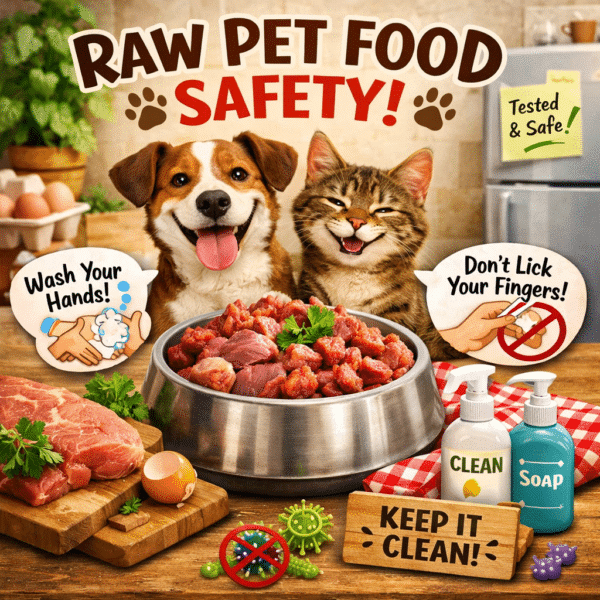
Wash hands after handling
-
Clean preparation surfaces
-
Keep food frozen until needed
-
Avoid cross-contamination.
And let’s be honest…
👉 You probably wouldn’t lick your fingers clean after preparing the dog’s dinner — and if you would, maybe let’s rethink that 😉
A little humour aside, simple hygiene goes a long way.
Media headlines vs reality
Media coverage often leans toward dramatic wording — it grabs attention, but sometimes loses balance.
Most official guidance isn’t saying:
❌ “Don’t feed raw.”
It’s saying:
✅ “Handle it properly.”
✅ “Understand the nature of raw meat.”
That’s a big difference.
The bigger picture for pet owners
Many people choose raw feeding because they want:
-
Natural ingredients
-
Less processing
-
Control over what their pets eat
-
Diets closer to ancestral feeding patterns.
Others prefer different feeding styles — and that’s OK too. What matters most is informed, responsible choices.
Our reassurance to you
We take safety seriously — always have.
From sourcing and testing to storage and customer education, our goal is simple:
👉 Nutritious, responsibly produced raw food you can trust.
And if you ever have questions, we’d rather you ask than worry.
Final thought
Raw feeding doesn’t have to be controversial.
Handled sensibly, it’s simply another way to feed pets — one that many animals thrive on.
Just remember:
Wash your hands…
Clean the worktop…
And definitely leave the finger-licking to the dog 😄